Winter break is coming, and with it comes a full calendar: family visits, cookie baking, light displays, and maybe a little screen time too. Many parents ask me, “How do I keep my child’s speech and language growing when we’re out of our normal routine?”
Here’s the good news: you don’t need flashcards or worksheets. The holidays are full of natural, motivating chances to talk, and children learn language best through play and everyday moments with the people they love. As a speech-language pathologist, these are a few of my favorite low-prep activities for little talkers, roughly ages 18 months to 5 years.
1. Wrap It, Unwrap It
Wrap a few small, familiar toys or snacks in leftover paper or a gift bag. Before your child opens each one, pause and build anticipation: “What’s inside? Is it big or little?” Then model simple words as they open it: “Open!” “Pull!” “Wow, a car!”
Why it works: Anticipation draws attention, and repeating the same words makes them easier to imitate. For early talkers, accept any attempt (a sound, a sign, or a word) and repeat it back correctly with a smile.
2. Cookie Kitchen Talk
Baking or decorating cookies is full of action words and descriptive words. Narrate as you go: “Pour. Stir, stir, stir. It’s sticky! Sprinkles on top.” Give your child small choices: “Do you want the star or the tree?” Choices invite your child to use words without pressure.
Tip: Leave a needed item just out of reach, like the sprinkles, and wait. That pause is a powerful invitation for your child to ask for help.
3. Light-Hunting Car Rides
Whether you’re driving to see holiday lights or just running errands, play “I spy” with lights and decorations. Younger children can point and label (“Star!” “Blue!”). Older preschoolers can practice describing (“I see something big, red, and shiny”) or take turns giving clues.
4. Read the Same Holiday Book Again (and Again)
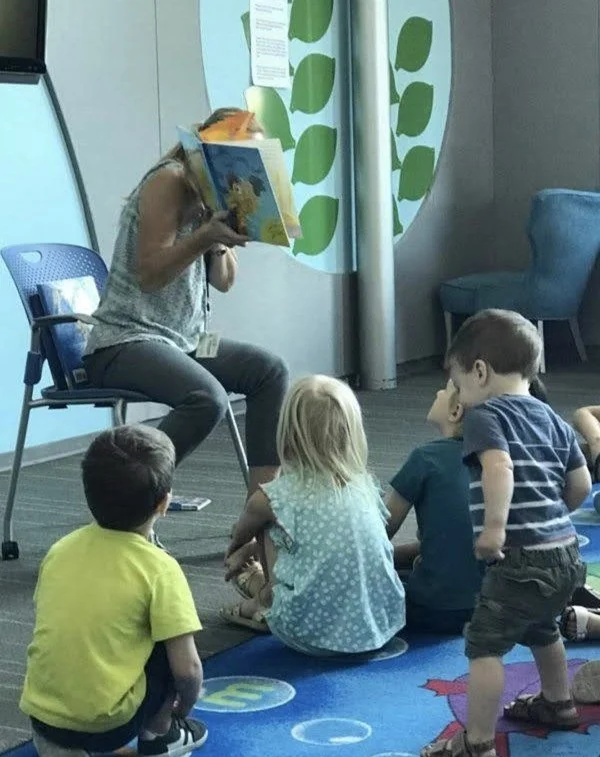
Repetition is a gift for language learners. Pick a favorite seasonal picture book and read it many times over the break. After a few readings, pause before a predictable word and let your child fill it in. Talk about the pictures, too: “Uh oh, the snowman is melting! How does he feel?”
5. Snow Day Pretend Play (Arizona Style)
We may not get much snow in the Valley, but pretend snow works just as well. Use cotton balls, a white blanket, or shaving cream on a tray to “build a snowman,” “shovel the driveway,” or have a pretend snowball fight. Pretend play builds vocabulary, sequencing (“First the big ball, then the head”), and storytelling skills.
6. Family Photo Chats
When relatives visit or you scroll through holiday photos, talk about who’s who and what happened: “That’s Grandma. She is hugging you!” For older children, ask open-ended questions like “What was your favorite part of the party?” Retelling past events builds the narrative skills children later use in school.
7. Simon Says, Holiday Edition
Following directions is an important language skill. Try “Reindeer Says” with silly holiday actions: “Reindeer says jump like a reindeer,” “Reindeer says touch your nose like Rudolph.” Start with one-step directions and add two steps as your child is ready.
A Few Tips for Every Activity
Get face to face. Sit or kneel at your child’s level so they can see your mouth and expressions.
Slow down and wait. Count to five in your head after you ask a question or pause. Many children need extra time to respond.
Add one word. If your child says “car,” you can say “red car” or “car go!” This gently stretches their language.
Keep it fun. If your child loses interest, move on. Short, happy moments add up.
When to Check In With a Speech Therapist
Every child develops at their own pace, but the holidays are also a time when family members notice things. If you or a loved one have wondered whether your child is saying fewer words than other children their age, is hard for others to understand, gets frustrated when trying to communicate, or is stuttering, it’s always okay to ask. You can also take a look at our Communication Milestones guide on the blog for a quick age-by-age overview.
Early support makes a real difference, and an evaluation can give you clear answers and a plan, or peace of mind.
If you have questions about your child’s speech or language, I’d love to hear from you. Call Play and Bloom at (602) 316-6777 or reach out through our website to ask about an evaluation. Wishing your family a joyful, connected, and chatty holiday season!
Brittany Smith, Speech-Language Pathologist
Play and Bloom Speech Therapy, Glendale, AZ